
Recent News & Reflections
- Graduation to Action – HESA Supported Sisters Driving Lasting Change
- Investigating the Impact of the HESA Program
- Predicting Future Deforestation Levels in Malawi
To educate a sister is to educate a community
Higher Education for Sisters in Africa (HESA) provides opportunities for Catholic women religious in African countries to access undergraduate and master’s level education. We ensure that women religious receive credentials to enhance service to their communities. HESA is delivered through partnerships with higher education institutions in Africa and online in the USA.
HESA is the next step for many sisters in ASEC’s SLDI and Scholarship programs
ASEC aims to create an education pipeline for Catholic sisters in Africa, whereby sisters can complete one ASEC program and potentially enter into another program that builds upon the skills and education they already received. ASEC’s SLDI and Scholarship Program participants are well equipped to succeed in the HESA program. In fact, over 25% of HESA students are alumnae of ASEC’s other programs.
HESA Program Structure
- Model A: online-onsite hybrid, sisters study for one-year online at a partner university in the USA, completing 27 credits.
- Model B: onsite, sisters study on campus at a partner university in Africa.

Cohort System
HESA recruits sisters to study at its partner institutions as a cohort of 4 to 20 sisters. Together the sisters participate in HESA orientation and annual reflective learning. The cohort serves as a support network throughout the sisters’ studies.
Becoming Alumnae
Upon completion of their undergraduate or master’s degree, HESA Alumnae either continue on to higher levels of education or return to their community to serve as congregational leaders. HESA Alumnae are meeting the needs present in their local communities through education, social service, pastoral, and other ministries.
HESA Outcomes*
Since the program’s inception in 2013:
- HESA has served 2,490 sisters through higher education institution partnerships in Africa and the USA.
- The top 3 ministries of HESA participants are teacher, administrator and bursar.
- 32% of HESA participants report teaching as their ministry (N=748).
- 44% of HESA participants are studying in the field of education (N=1,239).
- 1,729 sisters have completed their studies and earned degrees through HESA.
- Graduates of the HESA program have earned 820 awards (including First/Second Class Honors and Other Awards)
- 52% of the ASEC alumnae projects impact more than one UN Sustainable Development Goal.
For more detailed information about our outcomes, please see our evaluation reports and presentations.
HESA Evaluation Reports
- HESA Phase IV, Year 1 (2024-2025).PDF
- HESA Phase III, Year 4 (2023-2024).PDF
- HESA Phase III, Year 3 (2022-2023).PDF
- HESA Phase III, Year 2 (2021-2022).PDF
- HESA Phase III Year 1 (2020-2021).PDF
- HESA Phase II Online-Onsite Cohorts (2020).PDF
- HESA Phase II (2016-2020).PDF
- HESA Key Outcomes (April, 2019).PDF
- HESA Phase II Year 3 (2018-2019).PDF
- HESA Phase II Year 2 (2017-2018).PDF
- HESA Phase II Year 1 (2016-2017).PDF
- HESA Phase I (2013-2017).PDF
- HESA Bridge Year (2013-2014).PDF
For questions regarding HESA, please contact:

Success Stories from HESA
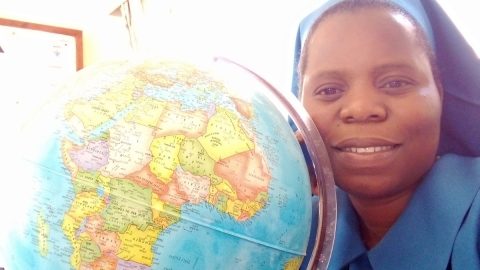
Predicting Future Deforestation Levels in Malawi
Through her research on deforestation and her work as a teacher, Sr. Agnes Kachali is educating communities in Malawi to protect the environment and inspiring young people to take action for a sustainable future.

“Women Belong in All Places Where Decisions Are Being Made”: Catholic Sister Lawyers
Through ASEC’s education programs, Catholic sisters in Tanzania are breaking barriers in the legal field as they teach, practice law, and advocate for justice and gender equality in their communities.
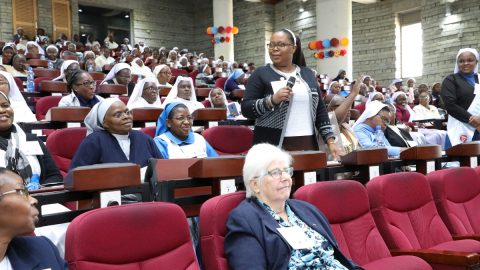
HESA Alumnae Inspire at CERRA-Africa’s Research Network Symposium
At the CERRA-Africa Global Research Network Symposium in Nairobi, Kenya, HESA alumnae and ASEC staff presented impactful research, highlighting the vital yet often-overlooked contributions of Catholic sisters to sustainable development across Africa and beyond.

Realizing the Dream: Empowering Women in Uganda
After surviving heartbreaking loss and poverty, Angelina Akoth’s life was transformed through a business training program led by Sr. Veronica Biribawa, MCESM, an ASEC HESA alumna, using her education to uplift women in Uganda.
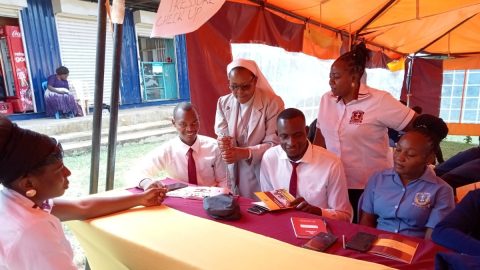
Training Future Nurses in Kenya
As a nurse educator and national examiner in Kenya, Sr. Gertrude Muhatia, SMK, uses her ASEC-sponsored education to mentor students with compassion and professionalism—empowering the next generation of healthcare workers.
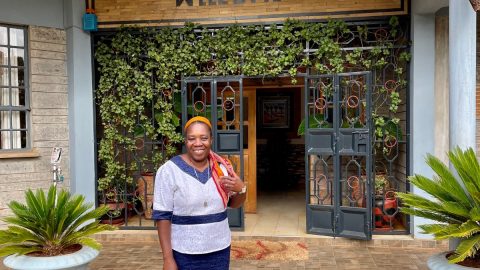
Overcoming Unemployment in Kenya
In Kenya, Sr. Georgette Sawadogo, DDS, is using her ASEC-sponsored education to fight youth unemployment by creating jobs and empowering young people, especially young mothers, through vocational training and social entrepreneurship.
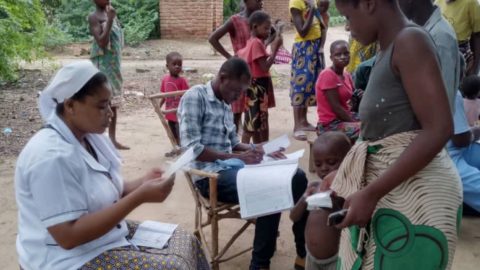
Reducing Maternal Mortality in Malawi
When a mother in Malawi faced a life-threatening childbirth complication, Sr. Maureen Chalamanda, SOL—a three-time ASEC alumna—used her education to save both mother and baby, proving how vital trained sisters are to community healthcare.
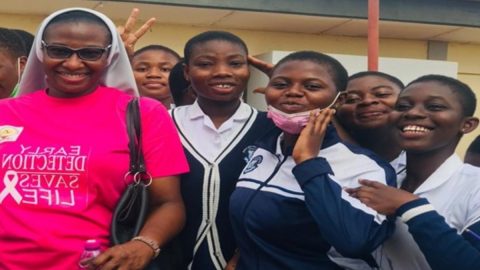
Breast Cancer Awareness: Empowering Change Through Sr. Grace’s Mission
Sr. Grace Akunna John-Emezi, HHCJ is transforming health awareness in African communities through her dedicated advocacy for breast cancer education.

Technical & Vocational Training in Cameroon
Sr. Vera Bi Kiekiseeh Otia, HHCJ, principal of SPICOTEC in Cameroon, leverages her ASEC education to expand access to technical and vocational training, empowering youth to become entrepreneurs and job creators.